What Is A Traditional French Christmas Eve Dinner?
The French Christmas Eve dinner, the réveillon, explained: the courses, the bûche de Noël, the Provençal thirteen desserts, and how to book a festive Christmas Eve meal in Paris.
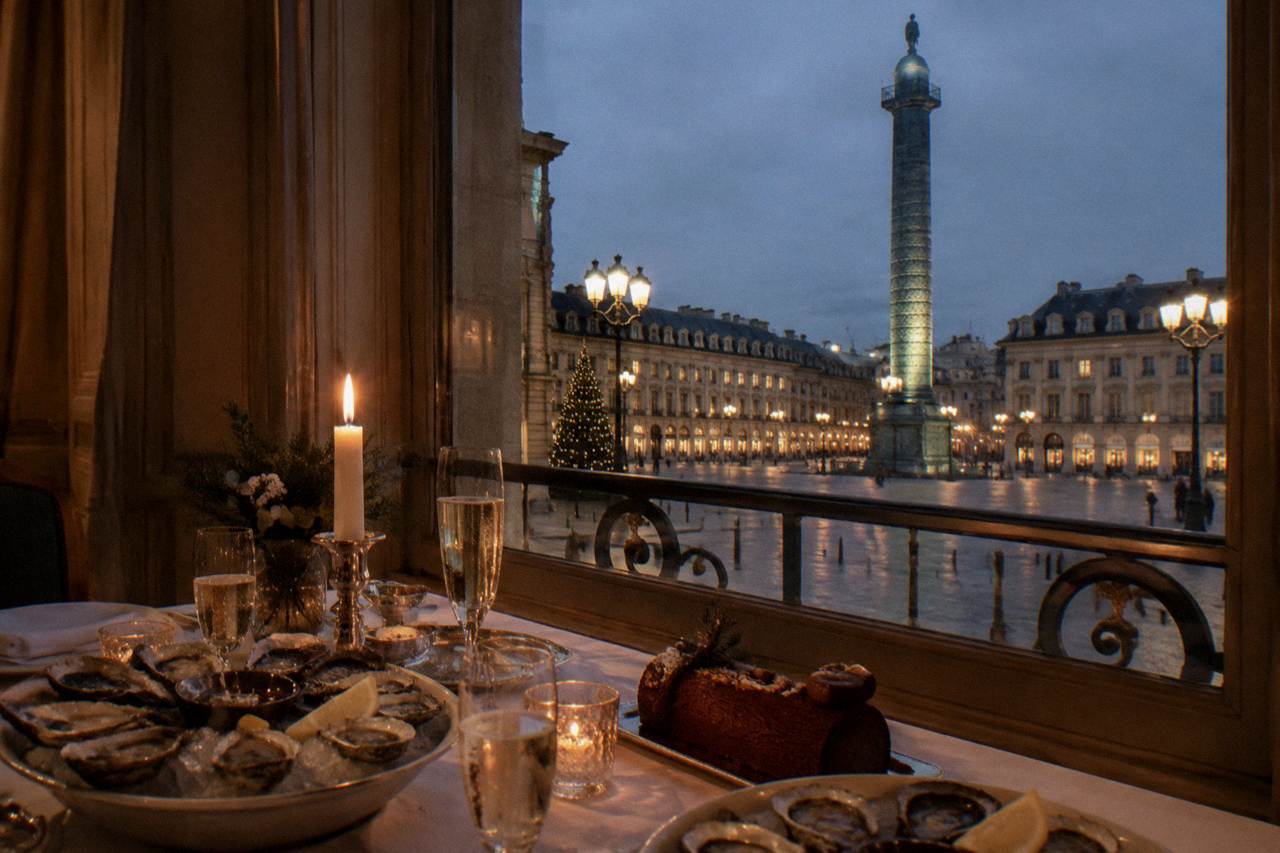
The evening of December 24 has a name in France that says everything about the meal: the réveillon, from réveiller, to wake up. Families stay up late, eat long and richly, and in many households head to midnight mass afterwards with the table still warm behind them. The menu is not a free-for-all. It follows a sequence that most French cooks would recognize instantly: something from the sea, something luxurious from the land, a roast with chestnuts, and a log-shaped cake to finish. In Paris, restaurants, cabarets and dinner cruises build their Christmas Eve offerings around exactly that shape, which is why a festive menu on the Seine reads like a réveillon set to music. To see how that meal fits into the wider holiday season, from the Christmas markets to midnight mass, read our guide to how Paris celebrates Christmas.
What Is A Traditional French Christmas Eve Dinner?
A traditional French Christmas Eve dinner is the réveillon: a multi-course feast eaten late on December 24, typically opening with oysters or foie gras, moving to a roast bird with chestnuts, and closing with a bûche de Noël, a yule log cake. Many families then attend midnight mass. The meal is deliberately extravagant, a reward at the end of Advent, and it stretches over several unhurried hours at the table.
The word itself carries the meaning. A réveillon is a wake, a night you stay up through, and the French use it for both December 24 and December 31. What distinguishes the Christmas version is the pairing of abundance with ritual. The meal often waits for the youngest family member, or for the return from midnight mass, and in some households the dishes arrive after the service rather than before it. The table is where the holiday actually happens. Gifts may wait until morning, but the evening belongs to the food.
The courses follow a logic of escalation. You begin cold and briny, with oysters on ice or smoked salmon, then move to something warm and fat, foie gras on toasted brioche or a vol-au-vent, then land on the centerpiece roast. Dessert is the bûche de Noël, a sponge roll iced to look like a log, a direct descendant of the actual yule log that families once burned from Christmas Eve through New Year's Day. The cake replaced the log as apartments replaced houses with hearths, and it is the one course that appears at nearly every réveillon in the country, whether the household is in Lille or Perpignan.
For visitors in Paris, the practical point is that this is the single hardest table of the year to book. Restaurants that stay open on December 24 build their evening around a fixed festive menu, and the ones with a view, on a boat or in a cabaret, sell out weeks ahead. The good news is that the format travels well: a dinner cruise on the Seine or a cabaret dinner show delivers the same course structure, a festive menu, a long evening and a sense of occasion, without needing a French grandmother in the kitchen.
What Does The Réveillon Menu Actually Include?
The classic réveillon runs from raw oysters and foie gras through a roast turkey or capon with chestnut stuffing to the bûche de Noël, with smoked salmon, scallops or lobster appearing in between depending on the region and the budget. Champagne and a good white wine accompany the seafood courses, and the whole service is slow by design.
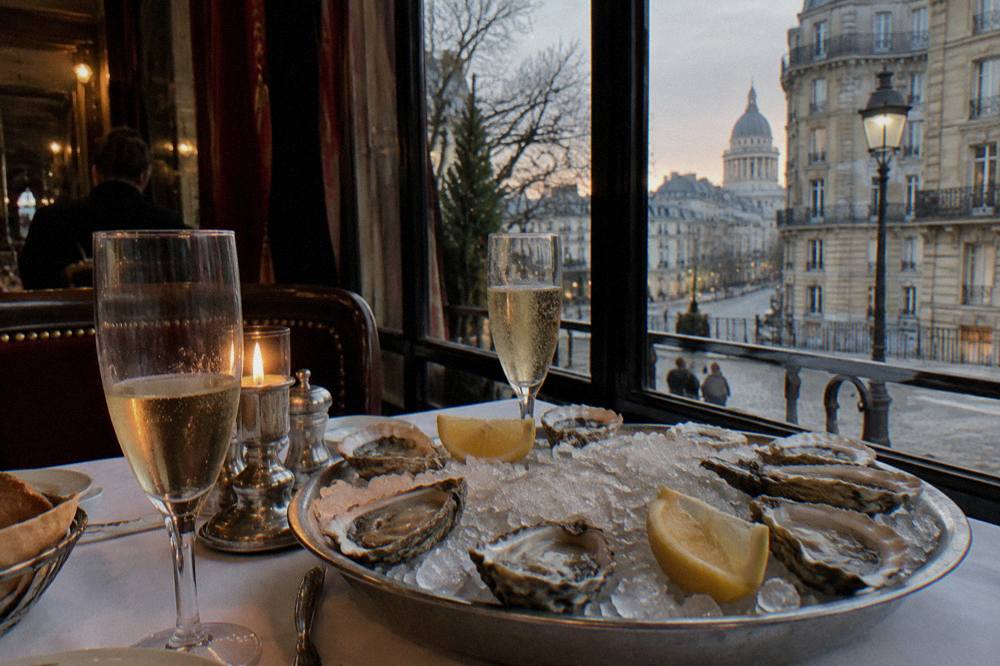
Start at the sea. Oysters are the emblematic opening, served raw with lemon, rye bread and shallot vinegar, and counted per dozen at the table. Smoked salmon, scallops sautéed in butter, and in wealthier households lobster or crayfish fill out the marine first act. Foie gras sits alongside or just after, usually on toasted brioche with a glass of sweet white wine. These are expensive ingredients, and that is the point: the réveillon is the one night of the year when the family budget openly yields to the table.
The roast is where households declare their allegiance. The traditional centerpiece is a turkey with chestnut stuffing, dinde aux marrons, though a capon or a rib roast appears in many versions and goose persists in some regions. Chestnuts, prunes and bacon weave through the stuffing. Vegetables stay classic: endives, green beans, potatoes roasted in the bird's fat. Then comes the bûche de Noël, buttercream or chocolate, sometimes iced with meringue mushrooms and powdered-sugar snow, and often accompanied by a bowl of the thirteen desserts in Provence, which we come to below.
| Course | Classic dishes | Typical accompaniment |
|---|---|---|
| Apéritif | Champagne, gougères, smoked salmon blinis | Toasts and petits fours before sitting down |
| Seafood starter | Raw oysters, smoked salmon, scallops | Dry white wine, lemon, rye bread |
| Rich starter | Foie gras on toasted brioche | Sweet white wine, fleur de sel |
| Main course | Turkey or capon with chestnut stuffing | Red wine, roast potatoes, green beans |
| Cheese | A selection of three or four cheeses | Baguette, sometimes a green salad |
| Dessert | Bûche de Noël, chocolates, candied chestnuts | Coffee, digestif, or sparkling wine |
The count of courses is flexible, but the order is not. A réveillon that skips the seafood still serves foie gras; one that skips foie gras still serves the log cake. What defines the meal is the arc from light to heavy to sweet, and the hours it takes to get there. Nobody rushes a réveillon, and a Christmas Eve dinner in a Paris restaurant that finishes in ninety minutes is not really doing the same thing, however good the food.
If you want the full arc without cooking any of it, the cruise and cabaret options in Paris are built on this template. The 5-course Christmas dinner cruise, from $199 per person, follows the same logic, festive starters, a substantial main, dessert, over 2.5 hours on the water. And if you are weighing the two big Seine operators against each other, the differences between their fleets and menus are covered in detail in the Bateaux Mouches versus Bateaux Parisiens comparison.
Why Is The Meal Called The Réveillon?
The name comes from the verb réveiller, to wake or revive, and it refers to the practice of staying awake through the night of December 24, traditionally after returning from midnight mass. The same word covers the New Year's Eve feast. The meal is understood as a vigil feast, food that keeps you up and alert for the religious heart of the night.
The etymology is old and the custom older. In Catholic France the evening of December 24 was a fast day, and the fast was broken after the midnight mass, la messe de minuit, with a meal that ran into the small hours. That is why the réveillon sits late on the calendar: it was never meant to be a 7 PM dinner. As midnight mass attendance declined over the generations, the meal slid earlier, and today many families eat at conventional dinner hours, but the name and the length survived the shift.
The vigil structure explains some of the menu's oddities. Rich food after a fast, seafood as a celebration rather than a staple, and the log cake as the dessert, all trace back to a night organized around a church service. In Paris, the Cathedral of Notre-Dame still holds its Christmas Eve masses, and the verified schedule from last season lists afternoon and evening masses followed by a vigil and midnight mass; the current schedule is published on the cathedral's own site, and entry to the cathedral itself is free with a reservation made there. A visitor could, in principle, do the whole traditional arc: an early festive dinner, the walk to the Île de la Cité, and mass before the walk home.
What Are The Thirteen Desserts Of Provence?
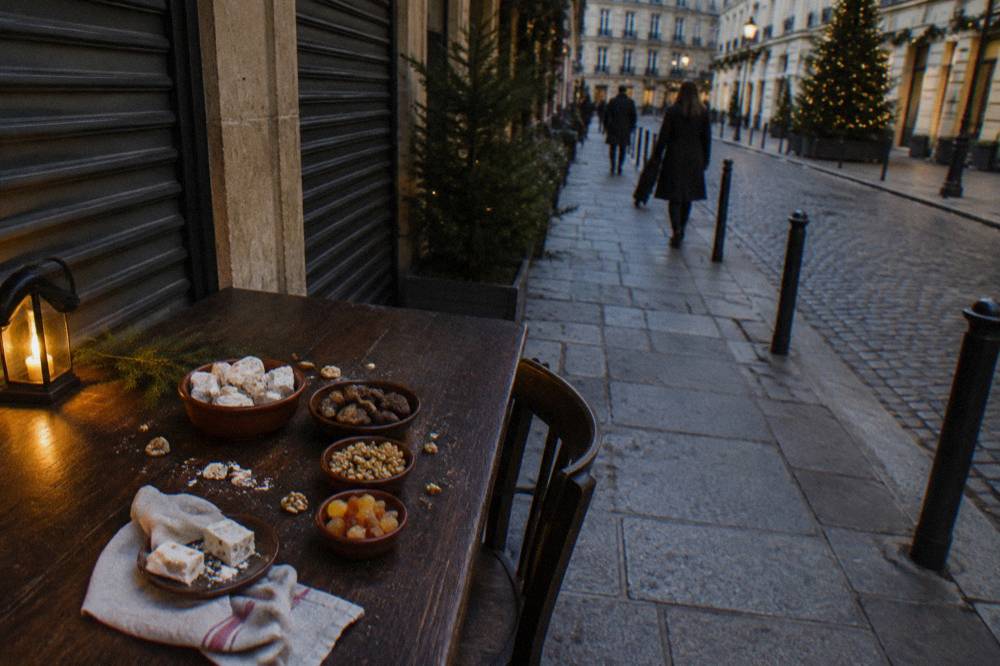
The thirteen desserts, les treize desserts, are the Provençal Christmas Eve finale: thirteen sweet items served together after the meal, representing Christ and the twelve apostles. The classic lineup includes nougat, candied fruit, calissons, dried figs, walnuts, almonds, hazelnuts, dates, and the pompe à huile, an olive oil bread that must be torn, never cut.
The number is fixed and the list is not. Every Provençal household argues about the exact thirteen, but the anchors repeat: the four mendiants, dried figs, walnuts, almonds and hazelnuts, standing in for the monastic orders; black and white nougat; candied melon and citron; dates; calissons; and the pompe à huile, a sweet olive-oil bread flavoured with orange blossom. Everyone at the table is meant to taste each of the thirteen, which is a lighter assignment than it sounds, since the portions are small and the point is variety rather than volume. Other pages covering the same trip are gathered on Christmas In Paris.
Outside Provence the thirteen desserts are known but not universally served; northern households lean on the bûche de Noël and leave it there. In Paris restaurants, the Provençal spread surfaces occasionally as a regional specialty menu, but the yule log is the dessert you will actually meet on a fixed Christmas Eve menu, whether in a bistro or on a dinner cruise. The two traditions are cousins, not rivals: both descend from the symbolic foods of the Christmas table, and both exist to stretch the evening out.
How Can You Have A Réveillon-Style Meal Out In Paris?
Paris gives you three realistic ways to eat a réveillon without a family kitchen: a fixed-menu dinner cruise on the Seine, a cabaret dinner show, or a restaurant festive menu booked well in advance. The cruise and cabaret options are bookable as products with confirmed dates and menus; the restaurant route means calling ahead and accepting that many rooms close on December 24.
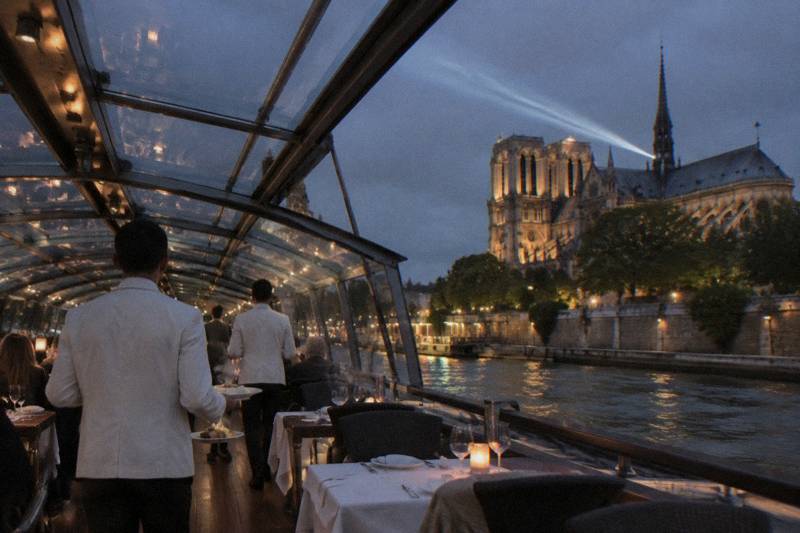
The Seine dinner cruises are the most straightforward. The 5-course Christmas dinner cruise from Bateaux Parisiens, from $199 per person with a 4.4 rating across 68 reviews, boards at the foot of the Eiffel Tower and serves a full festive menu under a glass canopy, with 2.5 hours on the water and about 4 hours total. It is the closest thing on the market to a réveillon with a moving view: the courses run long, the boat passes the lit monuments between them, and the evening has the necessary sense of occasion. Note the booking terms, this one is not refundable per the listing, so lock your plans before reserving.
The cabaret route adds a show to the same course structure. Paradis Latin's Christmas Eve dinner gala, from $338 per person, currently rated 4.8 from 16 reviews, serves a festive dinner followed by the L'Oiseau Paradis revue, with free cancellation per the listing. The operator's own page confirms the Christmas Eve dinner-show and the special menu; reported pricing there is around 300 euros, and the reported New Year's Eve version runs above 600 euros. Three and a half hours long, it is an evening that does the réveillon's job of stretching December 24 into something memorable, with the French supper-club tradition standing in for the family table.
A middle path is the 6-course lunch-or-dinner cruise, from $155 per person, rated 4.3 from 32 reviews, which runs about 2 hours 15 minutes from the Bateaux Parisiens ponton and includes the meal. The listing confirms Christmas Eve and Christmas Day dinner seatings, with check-in at 7 PM and an 8:30 PM departure on the festive dates. It suits visitors who want the menu without the gala pricing.
For the restaurant route, the honest warning is that December 24 is one of the two or three hardest reservations of the Paris year. The places that stay open for the holiday, including the Eiffel Tower's own restaurants and the cruise operators, fill their prime seatings far in advance, and that many Paris restaurants simply close for the evening. If a specific bistro is the dream, book it as early as the calendar allows, and have a fallback. A fuller rundown of the options, cruise menus included, is in the Christmas Eve dinner in Paris guide.
| Option | Price from | Duration | What you get |
|---|---|---|---|
| 5-course Christmas dinner cruise | $199 per person | 2.5 hours on the water, 4 hours total | Festive menu under a glass canopy, Eiffel Tower departure |
| Paradis Latin Christmas Eve gala | $338 per person | 3.5 hours | Festive dinner, then the L'Oiseau Paradis revue |
| 6-course lunch or dinner cruise | $155 per person | About 2 hours 15 minutes | Six courses with live music, festive seatings on Dec 24 and 25 |
| Restaurant festive menu | Varies by house | Typically 2 to 3 hours | Traditional réveillon courses, book far ahead |
What Should You Know Before Booking A Christmas Eve Table?
Three things decide the evening: book early because festive seatings sell out far ahead, read the cancellation terms because the dinner cruises are typically not refundable while the cabaret and some tours allow free cancellation, and plan the timing around what you want to do afterwards, since the traditional meal runs late and midnight mass, where scheduled, starts near 11 PM.
Cancellation is the detail most visitors miss. On this site's roster, the Christmas dinner cruises from Bateaux Parisiens and Bateaux Mouches are not refundable per their listings, while the Paradis Latin Christmas Eve gala, the walking and driving tours, and the 2CV tours all show free cancellation. That difference matters on a night when travel plans wobble: a delayed flight into Paris on December 23 can turn a non-refundable cruise into an expensive no-show. If your itinerary has any give in it, weight the free-cancellation options first.
Timing is the second detail. The traditional réveillon is a late meal, but the bookable versions in Paris mostly start at conventional hours, with dinner cruise check-ins around 7 PM and the cabaret seating timed to end before the last metros. If midnight mass at Notre-Dame is part of your plan, check the cathedral's published schedule for the current season and pick an early seating; the walk from a Seine embarkation point to the Île de la Cité is short, and the two halves of the traditional evening can still fit together. Visitors planning the whole holiday around the meal may also want the broader planning picture in the Paris at Christmas guide, which covers the lights, the markets and the December closures in one place.
Dress is the third. The réveillon is the most formal meal of the French year at home, and the Paris versions follow suit: the dinner cruises ask for smart attire, and the cabaret expects it. If December packing is on your mind, the practical guidance on layers, coats and evening wear for a night on the water is covered in what to wear on a dinner cruise on the Seine. December evenings in Paris run to a mean low of 39 F, so the coat you wear to the table matters as much as what is under it.
The last word belongs to the spirit of the thing. A réveillon is not a tasting menu; it is an evening. The courses are the scaffolding, but the tradition is the length of the table, the bottles that open as the night goes on, and the refusal to hurry. Whichever route you take in Paris, a glass-canopy cruise past the lit bridges or a cabaret on the Left Bank, give the evening the hours it asks for. That, more than any single dish, is what makes a Christmas Eve dinner French.
Common Questions About A Traditional French Christmas Eve Dinner
What Is A Traditional French Christmas Eve Dinner?
The réveillon: a long multi-course feast on December 24, usually oysters or foie gras to start, a roast turkey or capon with chestnuts as the main, and a bûche de Noël for dessert, with many families attending midnight mass afterwards.
What Is A Bûche De Noël?
The yule log cake, a rolled sponge decorated with buttercream or chocolate to look like a log. It descends from the real wooden log families once burned from Christmas Eve into the new year, and it is the one dessert that appears at nearly every French Christmas table.
Do The French Exchange Gifts On Christmas Eve Or Christmas Day?
It varies by household. Many families open gifts after the réveillon or after midnight mass on the night of the 24th, especially those with children, while others wait until Christmas morning. Both are common.
What Do The French Drink With The Christmas Eve Meal?
Champagne is the standard opener and often runs through the meal, with a dry white for the seafood, a red for the roast, and sometimes a sweet white with the foie gras. Coffee and a digestif close the evening.
Can You Book A Traditional Christmas Eve Dinner In Paris?
Yes, but early. Festive menus on Seine dinner cruises and at cabarets like Paradis Latin are bookable as products with confirmed seatings, while restaurants that stay open on December 24 fill weeks in advance and many close entirely.
What Are The Thirteen Desserts?
The Provençal Christmas Eve spread: thirteen sweet items served together, including nougat, dried figs, walnuts, almonds, hazelnuts, candied fruit, dates, calissons and the pompe à huile bread, representing Christ and the twelve apostles.